

You do not need a computer science degree to build software that changes lives. In fact, some of the most successful developers in history started with nothing but curiosity and a free online programming tutorial is a structured guide designed to teach individuals how to write code and build digital products from scratch. The barrier to entry has never been lower, yet the noise around "how to start" has never been louder. You have heard it all: "Python is easiest," "JavaScript is king," or "Learn C++ if you want to be serious." Most of this advice is outdated or biased by the speaker’s current job role.
This guide cuts through the hype. It provides a concrete roadmap for going from zero knowledge to writing functional code, choosing the right language for your goals, and building a portfolio that gets you hired. We will look at the specific tools, the mental models required, and the common traps that cause 90% of beginners to quit within the first three months.
Choosing Your First Language: Context Matters More Than Hype
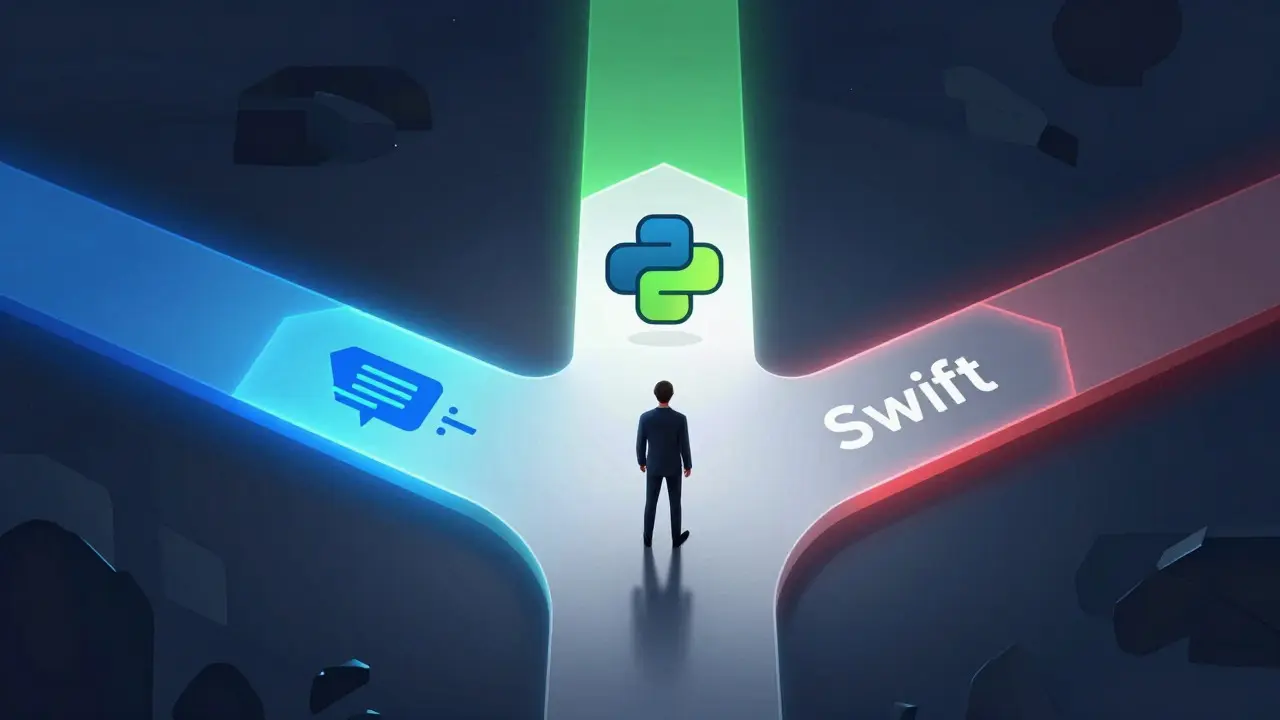
The biggest mistake beginners make is picking a programming language based on what they think looks cool or what a random YouTube video recommended. Instead, pick a language based on what you want to build. The language is just a tool; the logic is the skill.
If you want to build websites that users interact with directly-like social media platforms, e-commerce stores, or interactive dashboards-you should start with JavaScript is a versatile scripting language primarily used for creating dynamic content on web pages. It runs in every browser, meaning you can see your results instantly without complex setup. Frameworks like React or Vue.js are built on top of JavaScript, making it the dominant force in front-end development.
If your interest lies in data analysis, artificial intelligence, or automating boring tasks, Python is a high-level programming language known for its readable syntax and extensive libraries for data science. Python reads almost like English. Its community support is massive, and libraries like Pandas and TensorFlow allow you to handle complex data tasks with just a few lines of code. It is the standard for machine learning because it abstracts away the heavy mathematical lifting.
For mobile app development, you have two main paths. If you want to target iPhones exclusively, learn Swift is Apple's proprietary programming language for developing iOS, macOS, watchOS, and tvOS applications. If you want to reach both Android and iOS users with a single codebase, consider Kotlin is a modern programming language developed by JetBrains, primarily used for Android app development. (for Android native) or cross-platform frameworks like Flutter which uses Dart. However, for a pure beginner, sticking to one ecosystem reduces cognitive load.
| Language | Best For | Learning Curve | Job Market Demand |
|---|---|---|---|
| JavaScript | Web Development | Moderate | Very High |
| Python | Data Science, AI, Automation | Low | High |
| Swift | iOS Apps | Moderate | Medium |
| Java | Enterprise Backend, Android | Steep | High |
Setting Up Your Environment Without the Headache
Before you write a single line of code, you need a place to write it. Years ago, setting up a development environment involved editing configuration files manually and dealing with dependency conflicts. Today, tools have simplified this process significantly.
Start with a code editor. Visual Studio Code is a free, open-source code editor developed by Microsoft with extensive plugin support. It is lightweight, fast, and supports virtually every programming language through extensions. Install it, then add the extension for your chosen language (e.g., the Python extension or ESLint for JavaScript). This gives you syntax highlighting, error checking, and auto-completion, which speeds up learning by reducing typos.
Next, understand version control. Git is a distributed version control system used to track changes in source code during software development. Think of Git as a save point system for your code. It allows you to revert to previous versions if you break something and collaborate with others. Pair Git with GitHub is a cloud-based platform for hosting and collaborating on software projects using Git. GitHub is not just a backup service; it is your professional portfolio. Employers look at your GitHub profile to see how you write code, how you document projects, and whether you contribute to open source.
The Learning Loop: Theory vs. Practice
Watching tutorials creates an illusion of competence. You nod along, understanding every step the instructor takes. But when you open a blank file, your mind goes blank. This is known as "tutorial hell." To escape it, you must adopt a project-based learning approach.
Follow the 20/80 rule. Spend 20% of your time consuming educational content (videos, articles, documentation) and 80% of your time building things. Start small. Do not try to build the next Facebook on day one. Build a calculator. Then build a to-do list. Then build a weather app that fetches data from an API.
Here is a practical progression path:
- Week 1-2: Learn basic syntax. Variables, loops, conditionals, and functions. Write scripts that perform simple math or text manipulation.
- Week 3-4: Build a command-line application. A quiz game or a budget tracker that runs in your terminal. This forces you to handle user input and state management.
- Month 2: Integrate external data. Use an API (Application Programming Interface) to pull live data. For example, fetch cryptocurrency prices or movie listings and display them.
- Month 3: Deploy your project. Put your code on the internet so others can use it. Services like Netlify or Vercel make deploying static sites free and easy.
Debugging: The Real Skill Behind Coding
Beginners often view errors as failures. Experienced developers view errors as clues. Debugging is not about knowing the answer immediately; it is about systematically eliminating possibilities.
When your code breaks, follow these steps:
- Read the Error Message: Modern compilers and interpreters provide detailed stack traces. They tell you exactly which line failed and why. Ignore the panic and read the last few lines of the output.
- Isolate the Problem: Comment out sections of your code until the error disappears. Then uncomment them one by one to find the culprit. This binary search method saves hours of guessing.
- Use Print Statements: Insert `print()` or `console.log()` statements to check the value of variables at different stages. Seeing the actual data flow helps identify where logic diverges from expectations.
- Rubber Duck Debugging: Explain your code line-by-line to an inanimate object (or a patient friend). Often, the act of verbalizing the logic reveals the flaw.
Search engines are your best friend here. Copy the exact error message into Google or Stack Overflow. Chances are, someone else has encountered this exact issue. Learn to filter results by date to ensure the solution applies to your current version of the technology.

Building a Portfolio That Gets You Noticed
A certificate proves you watched a course. A portfolio proves you can do the work. When applying for jobs or freelance gigs, your code speaks louder than any diploma.
Your portfolio should include three types of projects:
- A Clone Project: Recreate a popular app (like Twitter or Spotify) with limited features. This shows you understand UI/UX patterns and state management.
- A Personal Tool: Build something that solves a problem you personally face. Maybe a script that organizes your downloads folder or a website that tracks your reading habits. Authenticity stands out.
- An Open Source Contribution: Find a small bug in a library you use and submit a fix. Even a typo correction in documentation counts. It demonstrates collaboration skills and familiarity with community standards.
Document each project thoroughly. Include a README file that explains what the project does, how to install it, and screenshots of it in action. Non-technical recruiters cannot run your code, but they can read your documentation. Clear communication is a critical soft skill in tech.
Navigating the Job Market in 2026
The tech landscape in 2026 is shaped by artificial intelligence assistance. Tools like GitHub Copilot and other AI pair programmers are now standard. This does not mean coding is dead; it means the bar for entry has shifted. Memorizing syntax is less valuable than understanding architecture and problem-solving.
Employers are looking for candidates who can leverage AI to speed up development while maintaining code quality and security. Be honest about your use of AI tools in interviews. Show how you verify AI-generated code rather than blindly accepting it. This demonstrates critical thinking and responsibility.
Networking remains crucial. Attend local meetups or join online communities like Discord servers dedicated to your chosen language. Building relationships leads to referrals, which are still the most effective way to land a job. Cold applying to job boards is inefficient; warm introductions bypass HR filters.
How long does it take to learn programming?
It depends on your definition of "learn." You can grasp basic syntax in a few weeks. Becoming job-ready typically takes 6 to 12 months of consistent, daily practice. Mastery is a lifelong journey as technologies evolve constantly.
Do I need a computer science degree?
No. Many successful developers are self-taught or attended coding bootcamps. A degree helps with theoretical foundations and visa sponsorship, but employers prioritize practical skills and portfolio evidence over academic credentials.
What is the best free resource to start learning?
FreeCodeCamp offers comprehensive, project-based curricula for web development. For Python, the official documentation and Automate the Boring Stuff with Python are excellent starting points. Both are completely free and highly respected.
Is JavaScript harder than Python?
Python has simpler syntax, making it easier to read and write initially. JavaScript requires understanding asynchronous programming and the DOM (Document Object Model), which adds complexity early on. However, JavaScript is essential for web development, giving it more immediate visual feedback.
Can I learn programming with no math background?
Yes. Most web development and general software engineering roles require only basic arithmetic and logical reasoning. Advanced fields like machine learning or game physics require higher-level mathematics, but you can delay those studies until necessary.