
Remember when you saw a pair of running shoes on Instagram and then spent the next three days seeing them everywhere? That wasn’t magic. It was early-stage data tracking. But today, in mid-2026, that experience has evolved into something far more sophisticated-and slightly unsettling. You don’t just see ads; you receive creative content tailored to your mood, browsing history, time of day, and even local weather conditions. This shift isn't coming. It’s here.
The role of AI is transforming advertising from a broadcast medium into a dynamic, conversational ecosystem. We are no longer talking about simple A/B testing or basic retargeting pixels. Modern generative AI is technology capable of creating text, images, video, and audio autonomously based on user prompts and data inputs allows brands to produce thousands of unique ad variations in seconds. The result? A future where every consumer sees a different version of a brand's message, optimized specifically for their likelihood to convert.
From Mass Marketing to Hyper-Personalization
For decades, advertising relied on demographics. If you were a male between 25 and 34, you got one type of car ad. If you were female in the same age bracket, you got another. It was blunt, inefficient, and often irrelevant. Today, hyper-personalization is the practice of using real-time data and machine learning to deliver individualized content to single users has replaced broad demographic buckets.
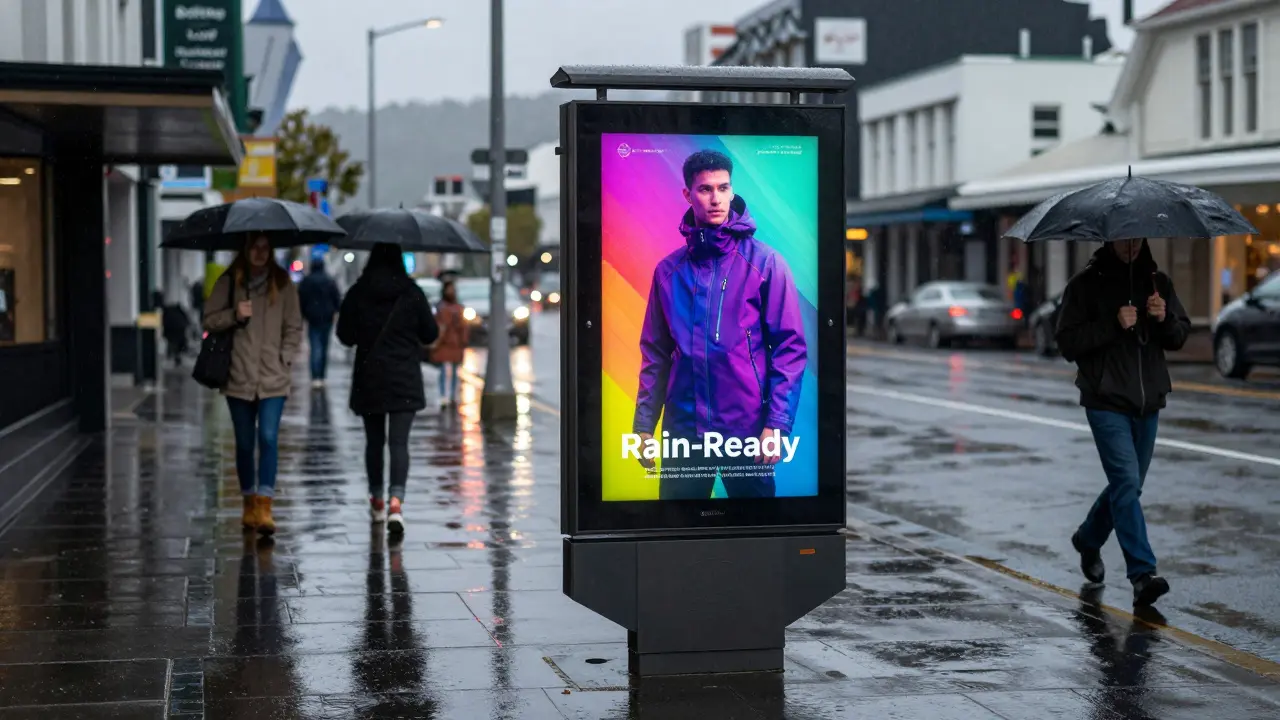
Imagine walking past a digital billboard in Wellington. In the past, it showed a generic sale for winter coats. Now, equipped with computer vision and anonymized mobile data, that screen recognizes that it’s raining, that foot traffic consists mostly of commuters heading home, and that many have recently searched for waterproof gear. The ad updates instantly to show a specific coat model with a "Rain-Ready" tagline and a QR code for immediate purchase. This isn't science fiction; it’s programmatic out-of-home (OOH) advertising powered by real-time bidding algorithms.
This level of precision requires massive data processing. Machine learning models analyze millions of data points per second-click-through rates, dwell time, scroll depth, and social sentiment-to adjust bids and creatives on the fly. The goal is no longer just visibility; it’s relevance at the exact moment of intent.
Generative AI: The Creative Engine
The most visible change in advertising since 2024 has been the integration of generative AI tools into creative workflows. Agencies that once took weeks to shoot, edit, and localize video campaigns can now generate hundreds of localized variants in hours. Tools like Sora, Runway Gen-3, and advanced versions of Midjourney allow marketers to create photorealistic imagery and video clips without traditional production crews.
Consider a global fashion brand launching a new sneaker line. Instead of shooting one hero campaign, they use generative AI to create 500 distinct images. Each image features the same shoe but placed in different environments relevant to specific target audiences: a skateboarder in Tokyo, a hiker in the Alps, or a street artist in Berlin. These assets are then fed into ad platforms, which test which environment resonates best with each micro-segment.
| Aspect | Traditional Workflow | AI-Augmented Workflow |
|---|---|---|
| Time to Market | 4-8 weeks | 24-72 hours |
| Creative Variations | 3-5 static assets | 100+ dynamic variants |
| Localization Cost | High (requires translation & reshoots) | Low (auto-translated voiceovers & visuals) |
| Optimization Speed | Manual review weekly | Real-time algorithmic adjustment |
This speed comes with caveats. Quality control remains crucial. Early adopters faced backlash when AI-generated faces had extra fingers or products looked distorted. By 2026, however, detection tools have improved, and human oversight is still required to ensure brand safety and authenticity. The hybrid model-human strategy + AI execution-is the industry standard.

Predictive Analytics and Customer Lifetime Value
Advertising isn’t just about acquiring new customers; it’s about retaining them. Here, predictive analytics is the use of statistical techniques and machine learning algorithms to identify the likelihood of future outcomes based on historical data plays a pivotal role. Brands use these models to calculate Customer Lifetime Value (CLV) not as a static number, but as a dynamic forecast.
If an AI system predicts that User A has a 90% chance of churning within 30 days, it can automatically trigger a personalized retention offer-a discount, a loyalty point bonus, or a curated recommendation list. Conversely, if User B shows high engagement signals, the system might increase ad spend on upselling premium products. This shifts budget allocation from guesswork to mathematical probability.
In e-commerce, this means fewer wasted impressions. Instead of showing everyone the same homepage banner, the site dynamically restructures itself. High-intent users see limited-stock warnings; browsers see inspirational lifestyle content. The ad follows the user across devices, maintaining context so the journey feels seamless rather than intrusive.
Privacy, Ethics, and the Trust Deficit
With great power comes great responsibility-and scrutiny. As AI becomes more invasive, consumer privacy concerns have reached a boiling point. Regulations like GDPR in Europe and emerging AI-specific laws in Asia and North America force advertisers to rethink data collection. The era of tracking cookies is effectively over, replaced by contextual targeting and first-party data strategies.
Transparency is non-negotiable. Consumers are increasingly savvy about AI-generated content. Studies show that disclosure-such as labeling an ad as "AI-created"-can actually build trust if done authentically. Hiding behind bots leads to brand erosion. Moreover, bias in training data remains a significant risk. If an AI model learns from historically biased hiring or lending data, its advertising recommendations may inadvertently exclude certain groups. Ethical AI frameworks are no longer optional; they are compliance requirements.
Brands must balance personalization with privacy. Zero-party data-information customers voluntarily share in exchange for value-is becoming the gold standard. Chatbots that ask preferences upfront, quizzes that recommend products, and loyalty programs that reward data sharing are replacing covert tracking methods.

The Human Element: Strategy Over Automation
Despite the hype, AI cannot replace human creativity and strategic thinking. Algorithms optimize what already exists; they don’t invent cultural movements. The best campaigns still stem from deep empathy, storytelling, and understanding of human emotion. AI handles the scale; humans handle the soul.
Think of AI as a co-pilot. It suggests routes, monitors fuel levels, and alerts to turbulence. But the pilot decides the destination. In advertising, this means marketers focus less on manual reporting and media buying, and more on brand positioning, narrative development, and community building. Skills like prompt engineering, data literacy, and ethical judgment are becoming core competencies for modern marketers.
Looking Ahead: What Comes Next?
We’re only scratching the surface. By late 2026 and into 2027, expect to see:
- Conversational Ads: Interactive ads where users chat with AI agents to customize products in real-time.
- Emotion-Sensitive Targeting: Using biometric data (with consent) to adjust ad tone based on viewer stress or excitement levels.
- Decentralized Ad Networks: Blockchain-based systems giving users control over their attention and allowing them to earn tokens for viewing ads.
The future of advertising isn’t about shouting louder. It’s about listening better. AI enables brands to hear what consumers want before they say it. Those who embrace this shift-with ethics, transparency, and human-centric design-will thrive. Those who rely solely on automation will find themselves lost in noise.
Is AI replacing human copywriters and designers?
Not entirely. AI automates repetitive tasks like generating multiple ad variations or resizing images, but it lacks true creativity and emotional intelligence. Human professionals are shifting toward roles in strategy, editing, and overseeing AI outputs to ensure quality and brand alignment.
How does AI improve ad ROI?
AI improves Return on Investment (ROI) by optimizing bid prices in real-time, identifying high-converting audience segments, and reducing wasted spend on irrelevant impressions. Predictive models also help allocate budgets to channels with the highest projected performance.
What are the biggest risks of using AI in advertising?
Key risks include data privacy violations, algorithmic bias leading to discriminatory targeting, and the creation of misleading or low-quality content. Brands must implement strict governance frameworks and regular audits to mitigate these issues.
Can small businesses afford AI advertising tools?
Yes. Many AI-powered platforms operate on subscription models with tiered pricing, making them accessible to small businesses. Additionally, major ad networks like Google and Meta integrate AI features directly into their free interfaces, leveling the playing field.
How do I know if my ads are being generated by AI?
Look for subtle inconsistencies in text phrasing, overly perfect lighting in images, or unnatural motion in videos. However, as technology advances, detection becomes harder. Always check for disclosures provided by the advertiser or platform.