

Key Takeaways for a Greener Future
- AI optimizes energy grids to integrate volatile renewable sources.
- Machine learning accelerates the discovery of new materials for carbon capture.
- Precision agriculture reduces chemical runoff and water waste.
- Real-time satellite monitoring stops illegal deforestation in hours, not months.
- AI-driven climate modeling provides hyper-local weather predictions for vulnerable cities.
Cleaning Up the Grid with Smart Energy
The biggest headache with solar and wind power is that they are intermittent. The sun doesn't always shine, and the wind doesn't always blow. This creates a massive gap in reliability. This is where Smart Grids come in. By using Machine Learning, utility companies can predict demand spikes and weather changes with incredible accuracy. For example, if an AI knows a heatwave is hitting Birmingham next Tuesday, it can trigger industrial batteries to store energy on Monday when the wind is peaking.
It's not just about the big pipes and wires. AI is moving the intelligence to the edge. Smart thermostats and industrial HVAC systems now use reinforcement learning to cut energy waste by up to 15% without the occupants even noticing a change in temperature. When you multiply that by millions of buildings, the carbon reduction is staggering. We are moving from a "dumb" grid that just pushes power to a "thinking" grid that balances itself.
Revolutionizing Carbon Capture and Material Science
We need to get carbon out of the air, but the materials we use to "scrub" CO2 are often expensive or inefficient. Traditionally, discovering a new chemical catalyst meant years of trial and error in a lab. Now, Generative AI is simulating millions of molecular combinations in a digital environment before a single beaker is touched. This process, known as high-throughput screening, has shortened the development cycle for Carbon Capture technologies from decades to months.
| Technology | Traditional Method | AI-Enhanced Method | Estimated Speedup |
|---|---|---|---|
| Battery Chemistry | Manual Lab Testing | Predictive Molecular Modeling | 10x Faster |
| Carbon Scrubbers | Physical Prototyping | Virtual Simulation | 5x Faster |
| Solar Cell Efficiency | Iterative Layering | AI Perovskite Optimization | 3x Faster |
Feeding the World Without Killing the Planet
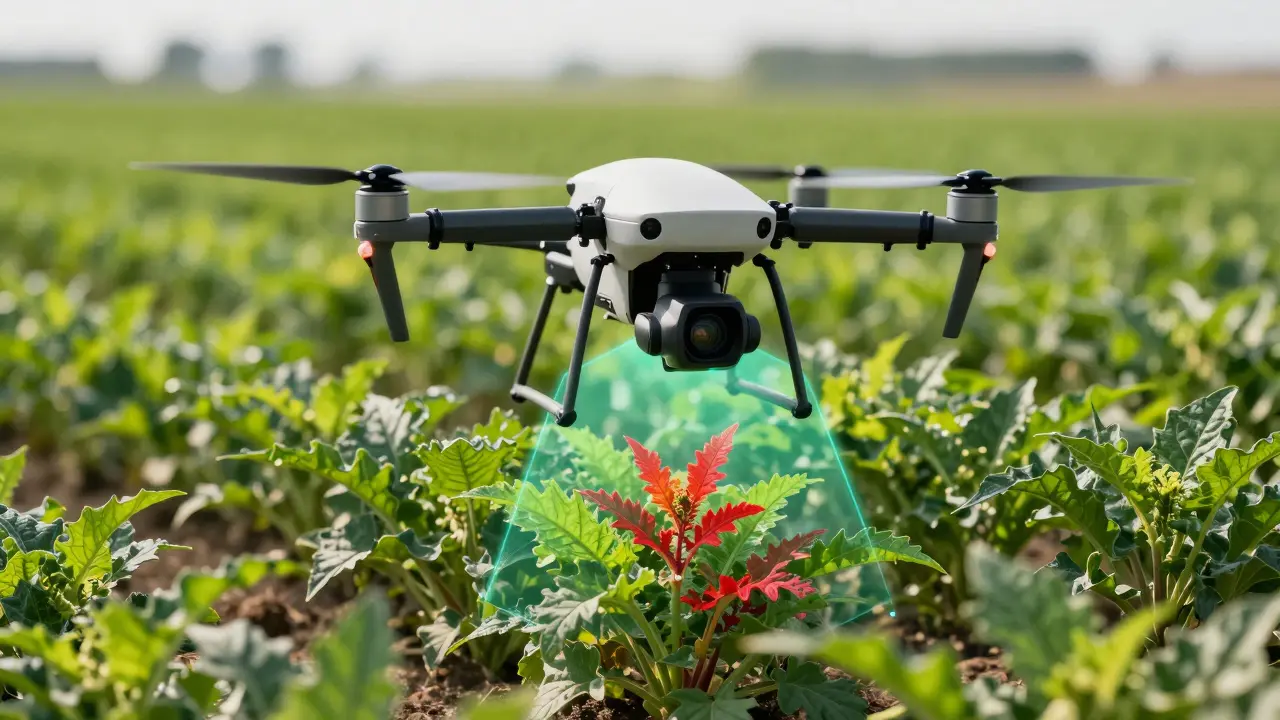
Agriculture is one of the biggest emitters of greenhouse gases, largely due to the over-application of nitrogen fertilizers. When we spray too much, the excess doesn't help the plant; it turns into nitrous oxide, a potent greenhouse gas. Precision Agriculture changes the game. Using AI-powered drones and sensors, farmers can now apply fertilizer only to the specific plants that need it, rather than blanket-spraying an entire 100-acre field.
Computer vision is the secret sauce here. AI models can distinguish between a healthy crop and a weed in milliseconds. This allows robotic weeders to zap weeds with lasers or tiny drops of herbicide, reducing chemical usage by up to 90% in some trials. This doesn't just lower emissions; it saves the farmer a fortune in input costs and keeps our groundwater cleaner.
Monitoring the Earth in Real-Time
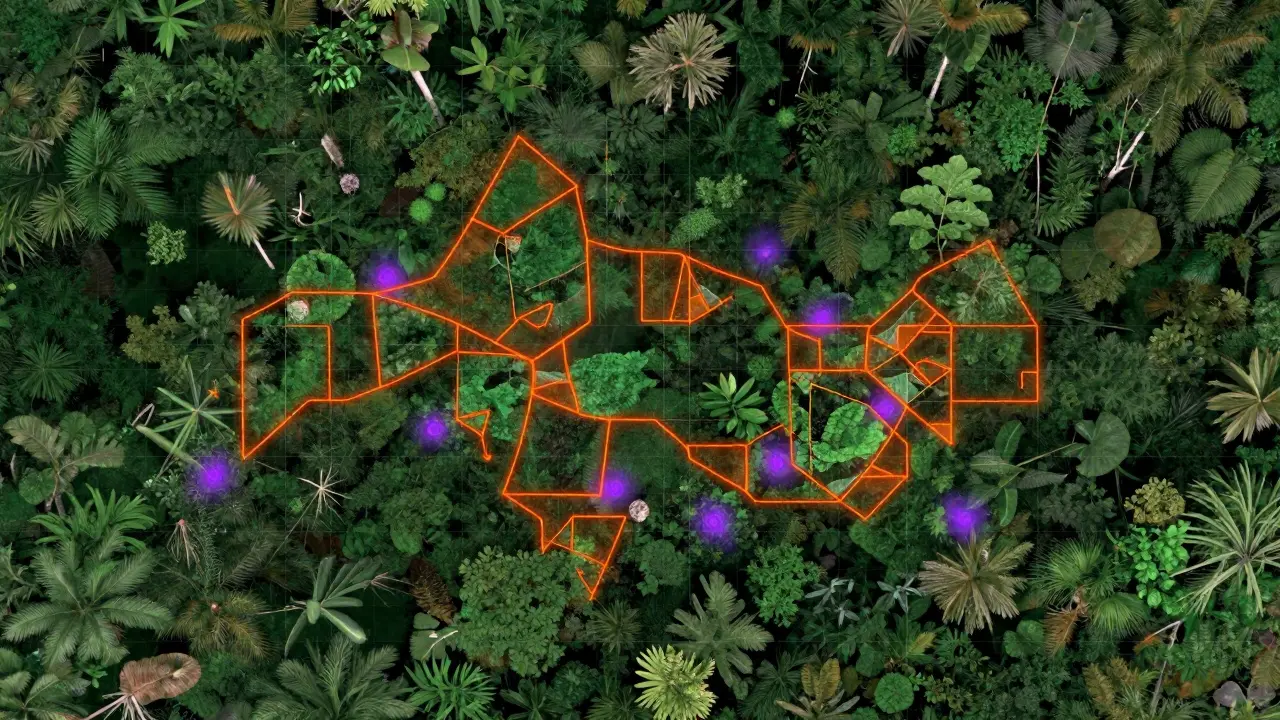
You can't fix what you can't measure. For years, we relied on manual reports or low-resolution images to track deforestation in the Amazon. By the time we realized a patch of forest was gone, the loggers were long gone. Now, we use Satellite Imagery paired with deep learning to detect changes in canopy cover in near real-time. These systems can flag an illegal road being built into a protected area within 24 hours.
Beyond forests, AI is tracking methane leaks-the "invisible killer" of the climate. Methane is far more aggressive than CO2 in the short term. AI algorithms can analyze spectral data from satellites to pinpoint exactly which pipeline or landfill is leaking, allowing companies to plug the hole before it becomes a climate catastrophe. It's like having a million security cameras watching the health of the planet simultaneously.
The Elephant in the Room: AI's Own Carbon Footprint
We have to be honest: training a massive large language model takes a staggering amount of electricity. The cooling requirements for data centers are immense. If we use AI to save the planet but burn a coal plant's worth of energy to do it, we're just moving the problem around. This is why the shift toward Green AI is so critical. Engineers are now focusing on algorithmic efficiency-getting the same result with a fraction of the compute power.
Many tech giants are now locating their data centers in regions with abundant geothermal or hydroelectric power, like Iceland or Quebec. They are also experimenting with liquid cooling and using the waste heat from servers to warm nearby homes. The goal is to ensure that the "carbon ROI" of an AI project is positive. If an AI model costs 100 tons of CO2 to train but saves 10,000 tons through energy optimization, it's a win.
Does AI actually reduce emissions or just optimize them?
It does both. AI reduces emissions directly by optimizing energy use in buildings and grids, and indirectly by accelerating the invention of cleaner technologies, such as more efficient solar cells or better batteries, which physically replace carbon-heavy alternatives.
Can AI predict natural disasters caused by climate change?
Yes, AI is significantly improving early warning systems. By analyzing atmospheric pressure, ocean temperatures, and historical patterns, AI can predict floods and hurricanes with much higher precision and lead time than traditional linear models, saving lives and infrastructure.
Is AI better than human scientists at fighting climate change?
It's not a competition. AI is a tool that handles the "brute force" part of science-scanning millions of data points or simulating chemicals. Humans provide the hypothesis and the ethical framework. The best results come when scientists use AI to narrow down the possibilities so they can focus their expertise on the most promising leads.
Which AI technology is most useful for the environment?
Different tools serve different roles. Machine Learning is best for energy forecasting and satellite analysis. Generative AI is revolutionizing material science and chemistry. Computer Vision is the primary driver for precision agriculture and deforestation monitoring.
Can AI help with urban planning to reduce heat islands?
Absolutely. AI can simulate wind tunnels and heat distribution in cities to determine where to plant trees or install reflective roofing. This helps reduce the "urban heat island effect," lowering the need for air conditioning and reducing city-wide energy demand.
What Now? Next Steps for Implementation
If you're a business owner or a policymaker, the first step isn't to "buy an AI." It's to identify where your data is leaky. For a city, that might be analyzing traffic patterns to reduce idling emissions. For a farm, it might be installing soil moisture sensors. The AI is only as good as the data it feeds on.
For the average person, the best move is to support companies that prioritize "Green AI" and transparency in their compute costs. We should be asking: "Where is this model hosted, and what is its power source?" The transition to a sustainable planet won't happen because of one magic algorithm, but through thousands of small, AI-optimized improvements across every sector of our economy.