
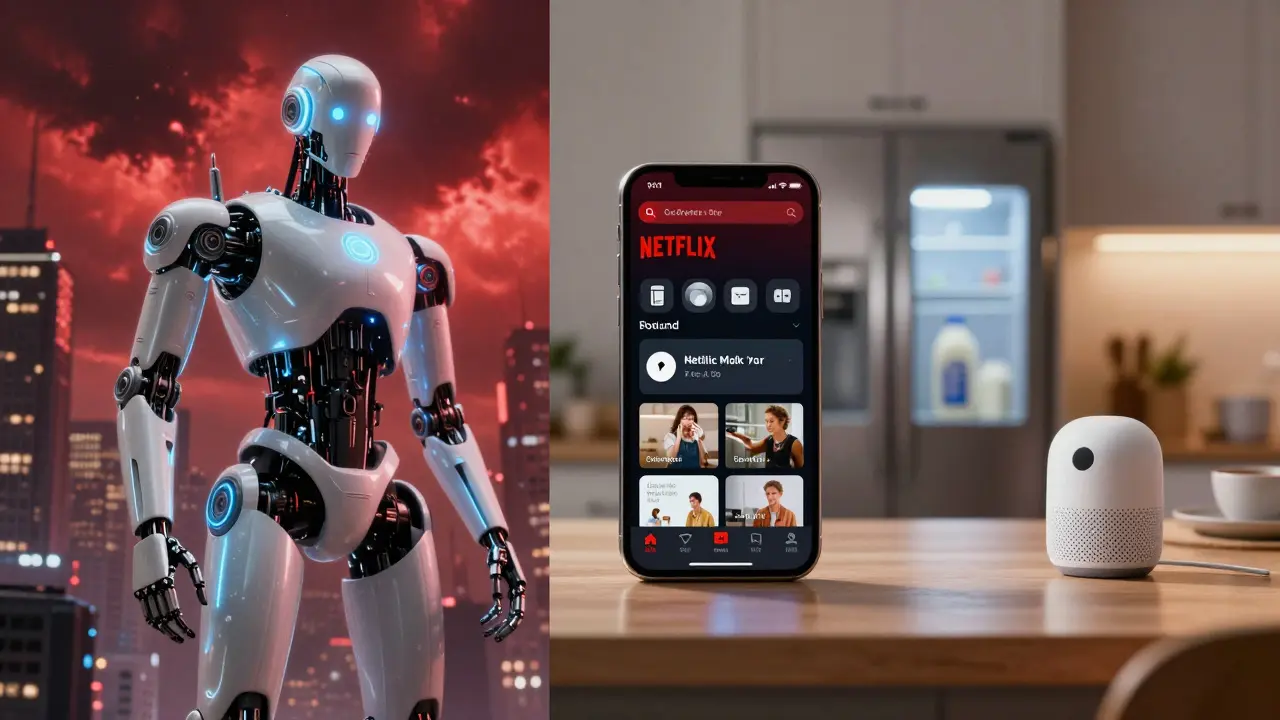
Artificial intelligence isn’t some distant future tech-it’s already in your phone, your car, and the grocery store checkout. But most of what you think you know about AI? It’s straight out of a sci-fi movie. Robots taking over? Self-aware machines? No. The truth is far more interesting-and far more useful.
What AI Actually Is (And Isn’t)
AI doesn’t mean thinking robots. It means artificial intelligence: systems that learn patterns from data and make decisions based on those patterns. Think of it like a super-fast statistician who never sleeps. It doesn’t understand the world the way you do. It doesn’t feel curiosity or fear. It just finds connections in numbers.
Take Netflix recommendations. That’s AI. It looks at what millions of people watched, how long they watched, and when they stopped. Then it guesses what you might like next. No soul. No consciousness. Just math.
Same with spam filters. They don’t know if an email is rude or funny. They just notice that 98% of emails with the words "FREE MONEY!" and 12 exclamation marks end up being scams. So they block them. That’s AI. Simple. Effective. Unsexy.
The Fiction: Hollywood’s AI Fantasy
Movie AI talks. It jokes. It rebels. It falls in love. Ex Machina, Her, Terminator-they all sell the same myth: AI will become conscious. That’s not just wrong. It’s misleading.
There’s no evidence that pattern recognition leads to self-awareness. Your calculator can solve 10,000 equations per second, but it doesn’t know what numbers are. Same with today’s AI. It can write a poem that sounds human, but it doesn’t feel the sadness behind it. It’s copying, not creating.
And the idea that AI will suddenly wake up one day? That’s like worrying your toaster will start running for mayor. It’s not impossible-science never says never-but right now, it’s pure fantasy. No lab, no university, no tech company has built a system that even comes close to human-level awareness. Not even close.
The Reality: AI in Everyday Life
Let’s talk about what AI actually does today. In 2026, it’s quietly running behind the scenes in ways you use every day:
- Your smartphone’s voice assistant? It uses speech recognition models trained on millions of voice samples. It doesn’t understand you-it matches sounds to patterns.
- Online banking fraud detection? AI spots transactions that don’t fit your usual spending habits. If you normally spend $40 on coffee and suddenly buy a $3,000 TV, it flags it. Not because it thinks you’re stealing-it just knows it’s weird.
- Amazon’s warehouse robots? They use computer vision and pathfinding algorithms to move packages faster than any human team. No AI "thinking"-just optimized routes and sensor feedback.
- Weather forecasts? AI models analyze satellite images, wind patterns, and historical data to predict storms with 92% accuracy in Australia. That’s not magic. It’s data.
These aren’t sci-fi. These are real tools built by engineers using machine learning, not magic.
Machine Learning: The Engine Behind AI
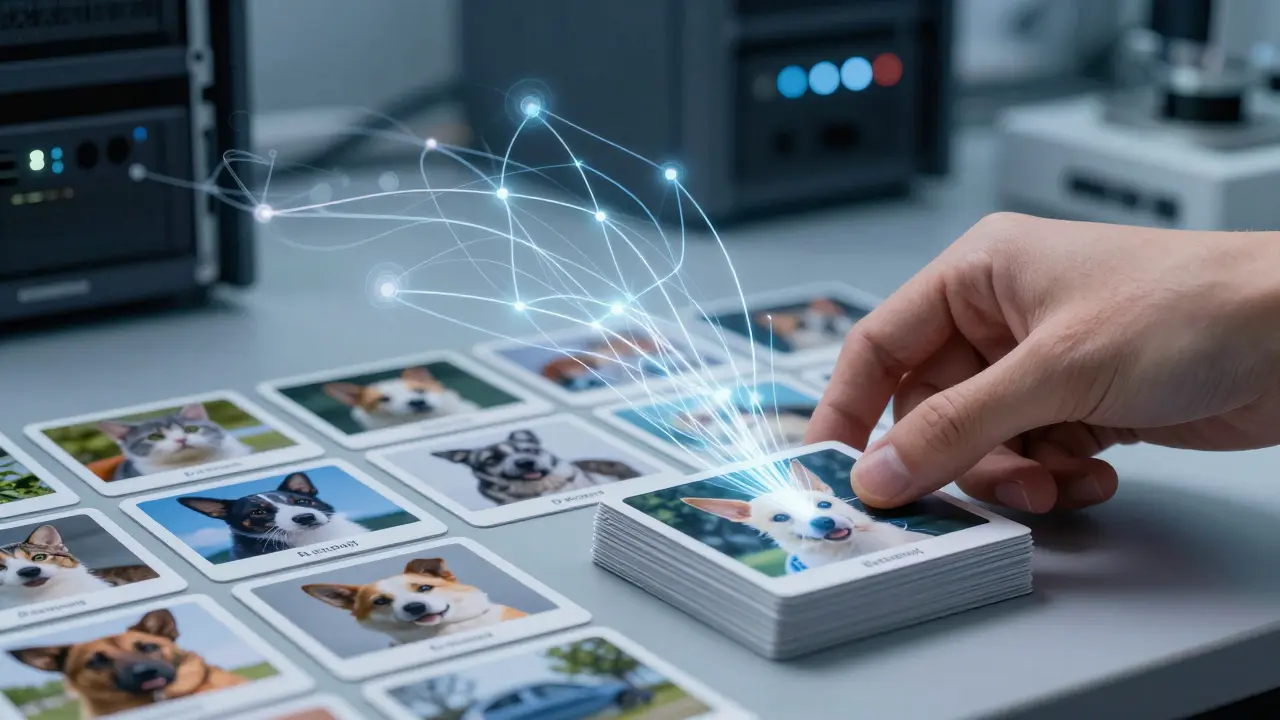
Most AI today runs on machine learning. That’s just a fancy term for teaching computers to improve at tasks by example. You don’t program rules. You give it data-and let it figure out the patterns.
For example, to teach an AI to recognize cats in photos:
- Feed it 10,000 labeled photos: "cat," "not cat."
- It looks for common features-pointy ears, whiskers, fur texture.
- After thousands of tries, it starts guessing correctly 95% of the time.
That’s it. No understanding of "catness." No love for felines. Just statistics.
This is why AI can make mistakes. If you train it only on photos of white cats in living rooms, it might not recognize a black cat on a porch. It doesn’t know the concept of "cat." It knows patterns. And patterns can be biased.
AI Ethics: The Real Problem Isn’t Robots-It’s Us
The biggest danger with AI isn’t it taking over. It’s us using it carelessly.
Amazon once built an AI to screen job applicants. It learned that resumes with words like "women’s chess club" or "all-girls school" were less likely to be hired. So it started downranking them. Not because it was sexist. Because the training data came from 10 years of mostly male hires.
That’s the problem. AI reflects the data it’s fed. If your data is biased, the AI will be too. And if you don’t check it, you’ll automate injustice.
Same with facial recognition. Studies from MIT and Stanford show some systems misidentify Black faces up to 35% more often than white faces. Not because the code is racist. Because the dataset was mostly white faces.
The solution isn’t banning AI. It’s better data. More diversity in training sets. Independent audits. Transparency. We need engineers who care about fairness, not just efficiency.
What AI Can’t Do (And Never Will)
Here’s a short list of what AI will never do:
- Feel empathy
- Understand sarcasm without context
- Make moral choices
- Be creative in the human sense
- Want anything
AI can write a love letter. But it doesn’t miss someone. It can paint a picture. But it doesn’t feel joy when it finishes. It can diagnose cancer from an X-ray. But it doesn’t care if you live or die.
Those things aren’t flaws. They’re limits. And they’re why AI should never replace human judgment in healthcare, justice, or education. It’s a tool-not a replacement.
How to Spot Real AI vs. Hype
Not every company using "AI" is actually using AI. Here’s how to tell:
- Real AI: Uses large datasets, improves over time, makes predictions based on patterns. Example: Google Translate adapting to regional slang.
- Hype AI: Just a simple rule-based system. Example: A chatbot that replies "I’m sorry, I don’t understand" to every question it can’t match.
Ask: "What data did you train it on?" If they can’t answer, it’s probably not AI. Or it’s badly done.
Also, real AI gets better with use. If a system never changes after launch? It’s not learning. It’s just a fancy script.
The Future: Smarter Tools, Not Superintelligences
By 2030, AI won’t be sentient. But it will be everywhere-and far more precise.
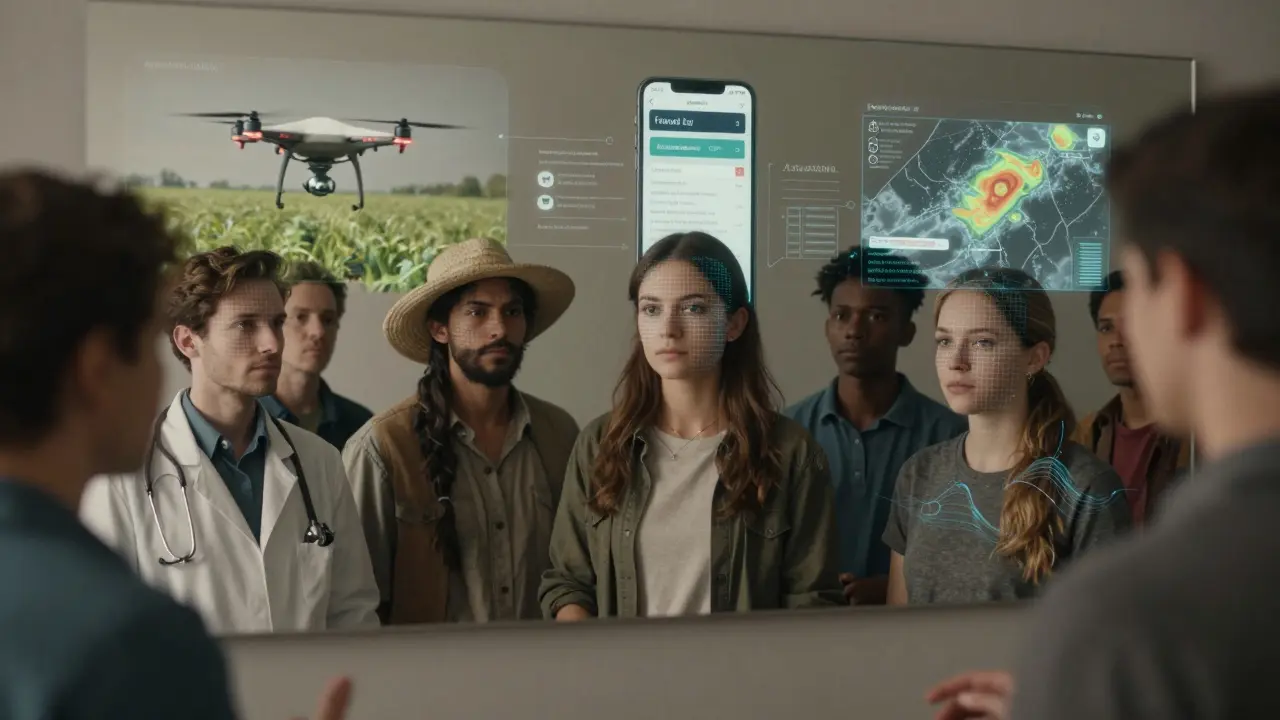
Imagine your fridge knowing you’re low on milk because it tracks your usage patterns, then ordering it automatically. Or your doctor using AI to spot early signs of diabetes from your blood tests before you even feel symptoms. Or farmers using drones and AI to detect crop disease from satellite images, reducing pesticide use by 40%.
These aren’t dreams. They’re already happening in labs in Hobart, Sydney, and Melbourne. And they’re all built on one idea: AI helps humans do their jobs better-not replace them.
Final Thought: AI Is a Mirror
AI doesn’t have intentions. It doesn’t have desires. It doesn’t have a soul.
But it does reflect us. What we feed it, what we value, what we ignore-it all shows up in the output. If we train it on lies, it will lie. If we train it on fairness, it can help us be fairer.
The real question isn’t "Will AI take over?" It’s "What kind of world do we want to build?" Because the answer to that? That’s entirely up to us.
Is artificial intelligence the same as machine learning?
No. Machine learning is one way to build AI, but not the only one. AI is the broad category of systems that mimic human intelligence. Machine learning is a technique within AI that uses data to learn patterns. Other methods include rule-based systems, expert systems, and evolutionary algorithms. So all machine learning is AI, but not all AI is machine learning.
Can AI become conscious like humans?
There’s zero scientific evidence that current or near-future AI can become conscious. Consciousness involves subjective experience-feeling pain, joy, or self-awareness. AI doesn’t have a body, senses, or emotions. It processes input and generates output based on patterns. Even the most advanced models today are just complex statistical engines. Scientists don’t even fully understand human consciousness, let alone how to replicate it in code.
Why do AI systems sometimes make biased decisions?
AI learns from data, and if that data reflects human bias, the AI will copy it. For example, if hiring data from the past favored men, an AI trained on that data will learn to favor men too. It’s not malicious-it’s just following patterns. The fix isn’t to remove AI, but to audit training data, diversify datasets, and test for fairness before deployment.
Do I need to be a programmer to use AI tools?
No. Most AI tools today are designed for non-technical users. You can use AI-powered grammar checkers, image generators, customer service bots, or even financial advisors-all without writing a single line of code. Platforms like Canva, Notion, and Google’s Gemini let you interact with AI through simple interfaces. You just need to know what you want to achieve.
Is AI dangerous if it makes mistakes?
AI isn’t dangerous because it’s evil-it’s dangerous when people trust it too much. A medical AI that misdiagnoses a tumor isn’t evil; it’s flawed training data. The real risk is using AI without human oversight. That’s why critical systems-like healthcare, law, and transportation-always include a human in the loop. AI suggests. Humans decide.