

You don’t need a computer science degree to land a high-paying job in tech. What you actually need is the ability to solve problems using code. In an industry that changes faster than fashion trends, coding skills are no longer just for developers. They are becoming the universal language of business efficiency, data analysis, and digital innovation.
The barrier to entry has never been lower, but the ceiling for success depends entirely on how deep your understanding goes. It’s not about memorizing syntax; it’s about learning how to think like a machine while designing for humans. This guide breaks down exactly which skills matter right now, how to build them without burning out, and why they remain the most reliable ticket to career stability in 2026.
Why Coding Is the New Literacy
We used to say that everyone should know how to read and write. Today, adding "and code" to that sentence isn’t hyperbole-it’s survival. The tech industry employs millions, but its influence extends into healthcare, finance, agriculture, and entertainment. If you can automate a repetitive task, analyze a dataset, or build a simple web tool, you immediately become more valuable to any organization.
Consider the shift in hiring practices over the last five years. Companies stopped asking for degrees as a primary filter because they realized that portfolios speak louder than diplomas. A GitHub repository with clean, functional code proves you can do the work. A certificate from a bootcamp shows initiative. But raw problem-solving ability? That gets you hired.
Moreover, coding literacy empowers you to understand the tools that run your life. When you understand how algorithms work, you stop being a passive consumer of technology and start becoming an active participant. You can spot bad UX design, question data privacy policies, and even build your own solutions instead of waiting for big tech to provide them.
The Core Technical Stack You Need to Know
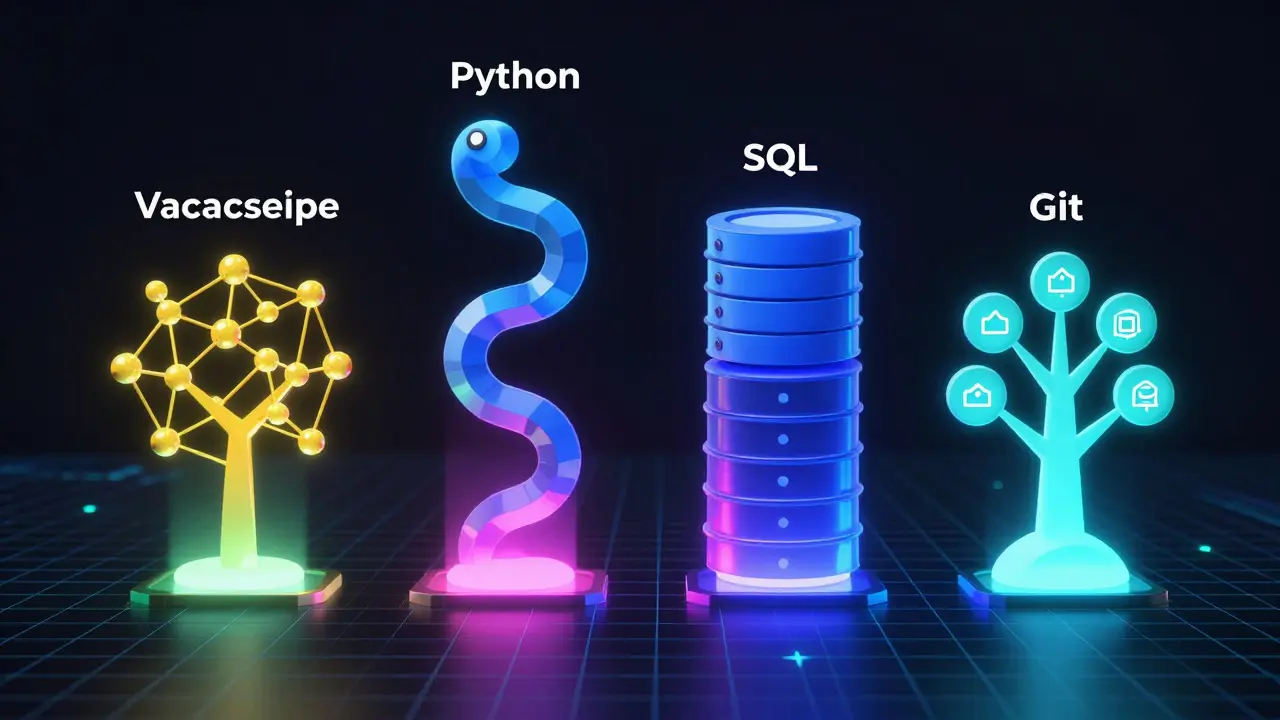
Trying to learn every programming language at once is a recipe for failure. Instead, focus on the foundational layers that support almost all modern applications. Here is the hierarchy of importance for beginners aiming for professional success:
- JavaScript is the dominant language of the web, essential for both frontend interactivity and backend server logic via Node.js. If you only learn one language, make it this one. It powers everything from simple browser animations to complex enterprise applications.
- Python is a versatile, beginner-friendly language widely used in data science, artificial intelligence, and automation scripting. Its readability makes it perfect for learning core concepts like loops, functions, and object-oriented programming without getting bogged down in complex syntax.
- SQL is Structured Query Language, the standard for managing and retrieving data from relational databases. No matter what application you build, it likely needs to store user data. Knowing how to talk to databases is non-negotiable.
- Git is a version control system that tracks changes in source code during software development. You cannot work in a team without Git. It allows multiple developers to work on the same project simultaneously without overwriting each other’s work.
Once you have these four pillars, expanding into specialized areas becomes much easier. Want to build mobile apps? Learn React Native (which uses JavaScript). Interested in cloud infrastructure? Pick up Terraform or AWS CLI. The foundation matters more than the specific framework.
| Language | Primary Use Case | Learning Curve | Job Market Demand (2026) |
|---|---|---|---|
| JavaScript | Web Development (Frontend & Backend) | Moderate | Very High |
| Python | Data Science, AI, Automation | Low | High |
| SQL | Database Management | Low | High |
| TypeScript | Large-Scale Web Applications | Moderate-High | High |
Soft Skills: The Hidden Differentiator
Here is a secret that senior engineers know but rarely advertise: coding is only half the job. The other half is communication. You will spend more time reading documentation, explaining your logic to teammates, and debugging someone else’s code than writing new features from scratch.
Problem decomposition is the critical soft skill. Can you take a vague request like "make the site faster" and break it down into testable hypotheses? Can you explain why a certain database query is slow to a non-technical product manager? These abilities separate juniors from seniors.
Collaboration tools have evolved too. Understanding agile methodologies, participating in code reviews, and writing clear commit messages are part of the technical workflow. Your code might be brilliant, but if it’s messy, untested, and impossible for others to maintain, it’s worthless to a business. Clean code is kind code.
Building a Portfolio That Gets You Hired
Tutorials give you a false sense of competence. You follow along, type what the instructor types, and feel smart. But the moment you open a blank text editor, panic sets in. This is known as "tutorial hell." To escape it, you must build projects that solve real problems.
Don’t build another to-do list app. Everyone does that. Instead, look at your daily life. Do you hate tracking your expenses? Build a personal finance dashboard. Do you want to monitor local weather patterns? Create a scraper that pulls data from meteorological sites. The goal is to encounter errors you haven’t seen before and figure out how to fix them.
Host your code on GitHub. Write a README file that explains what the project does, how to install it, and why you built it. Recruiters and hiring managers skim these files. A well-documented project shows professionalism and attention to detail-traits that are highly valued in remote-first companies.

Navigating the Job Market in 2026
The tech job market has corrected itself after the boom-and-bust cycles of the previous decade. Entry-level roles are more competitive, but mid-level positions with specialized skills are thriving. Companies are looking for T-shaped developers: people with broad knowledge across many areas but deep expertise in one.
Remote work remains standard, but hybrid models are returning. This means you need to be proactive about networking. LinkedIn is useful, but direct outreach to engineering leads at companies you admire works better. Contribute to open-source projects. Join local meetups or online communities like Discord servers dedicated to specific technologies.
Salaries have stabilized, but benefits packages have improved. Look for companies that offer continuous learning budgets. Technology moves fast; if your employer doesn’t invest in your growth, you’ll stagnate within two years. Ask about their tech stack during interviews. Are they using outdated frameworks? Or are they adopting modern standards like WebAssembly or edge computing?
Continuous Learning: Avoiding Burnout
The pressure to always learn the newest framework is exhausting. It’s called "framework fatigue," and it’s real. Resist the urge to jump on every trend. Focus on fundamentals. Data structures, algorithms, network protocols, and system design principles change very slowly. Master these, and picking up a new library takes days, not months.
Set boundaries for your learning. Dedicate specific hours to study, but also schedule time for rest. Burnout is the number one reason talented developers leave the industry. Remember that you are building a marathon, not a sprint. Consistency beats intensity.
Finally, teach what you learn. Writing blog posts, recording short videos, or helping beginners on forums forces you to clarify your own understanding. If you can’t explain a concept simply, you don’t understand it well enough. Teaching solidifies your knowledge and builds your personal brand simultaneously.
Is it too late to start learning coding in 2026?
Absolutely not. The demand for technical skills continues to grow across industries. While entry-level competition is higher, there is a shortage of mid-to-senior level developers who can solve complex problems. Starting now gives you access to modern tools and AI-assisted development workflows that make learning faster than ever before.
Do I need a computer science degree to get a tech job?
No. Most tech companies prioritize practical skills and portfolio projects over formal education. Bootcamps, self-study, and online certifications are widely accepted. However, a CS degree can help with visa sponsorship and may provide a deeper theoretical foundation for advanced roles in algorithm design or systems architecture.
Which programming language should I learn first?
JavaScript is the best starting point for web development, which offers the most job opportunities. Python is ideal if you are interested in data science, AI, or automation. Both languages have large communities, extensive documentation, and gentle learning curves compared to languages like C++ or Rust.
How long does it take to become job-ready?
With consistent daily practice of 2-4 hours, most people can reach a junior developer level in 6 to 12 months. This timeline assumes you are building real projects and not just watching tutorials. Mastery takes years, but employability comes from demonstrating competence in core tasks like building responsive websites and connecting to APIs.
Will AI replace coders in the near future?
AI will not replace coders, but coders who use AI will replace those who don't. AI tools like GitHub Copilot assist with boilerplate code and debugging, allowing developers to focus on high-level architecture and complex problem-solving. The role is shifting from writing every line of code to reviewing and integrating AI-generated solutions effectively.